
NFPA 855 2026 BESS: Pre-PO Document Checklist
Before you sign the PO, verify which NFPA 855 2026 BESS documents your supplier must hand over — edition, UL 9540A test level, spacing coverage and HMA.
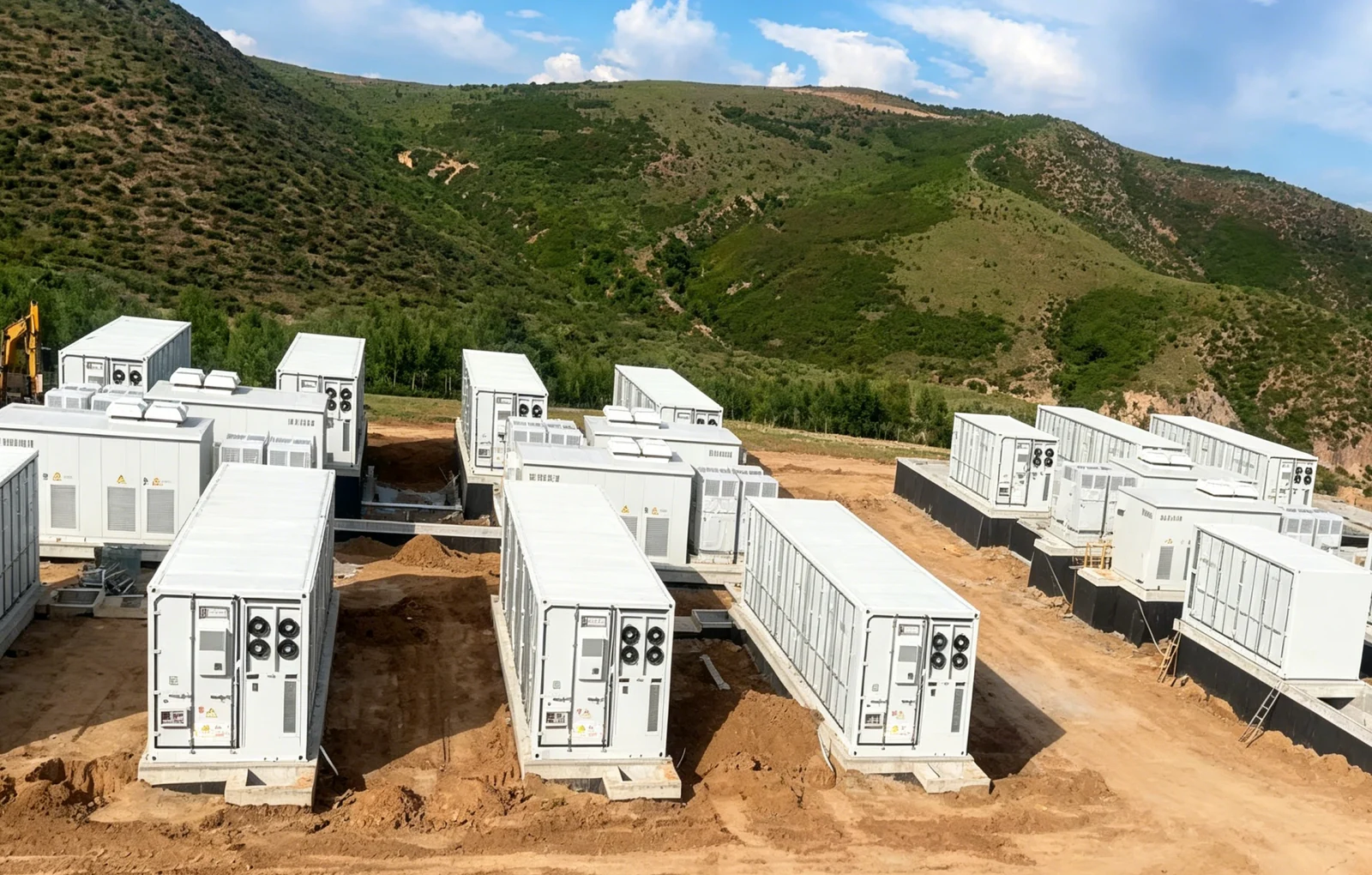
The short answer: before you release a deposit on a C&I battery storage project, put five document classes in hand — the UL 9540 system listing certificate for the exact configuration on your bill of materials; the full UL 9540A test report showing which test levels were reached and which configuration was tested; a site-specific hazard mitigation analysis (HMA); the detection and deflagration-protection design basis with the standards it references; and written confirmation of the NFPA 855 edition your AHJ actually enforces. Two of those five are documents a supplier can email in an afternoon. The other three are where the rework risk lives, because they only work if they describe your site, your grouping and your jurisdiction.
This page is a payment-gate checklist, not a standards explainer. Each of the nine checks below is written the same way: document to demand → what must be visible on it → what to withhold or escalate if it is missing. It deliberately covers only the document requirements that the current NFPA 855 cycle has created or upgraded. The broader supplier-qualification items — company history, references, warranty terms, factory audit rights — belong on a separate pre-payment vetting list and are not repeated here.
One boundary up front. We cannot tell you which edition your specific AHJ has adopted, and neither can your supplier with any authority. Adoption of a new NFPA edition runs through state and local code cycles at different speeds; UL Solutions itself notes that adoption of the 2026 edition will take time. Treat any "effective from" date you read online, including in this article, as unverified until the AHJ or NFPA's own publication confirms it in writing.
First, fix the instrument hierarchy — most procurement errors start here
Buyers routinely conflate four instruments that do completely different jobs. Learn the distinction once and every check below reads faster:
| Instrument | What it is | What it tells you | What it does not tell you |
|---|---|---|---|
| UL 9540 | Product-safety certification that lists the energy storage system as equipment | The configuration has been evaluated and listed by a recognized testing laboratory | Whether the installation layout on your site is acceptable |
| UL 9540A | Test method that measures thermal runaway, propagation between cells and modules, heat release and flammable gas generation | Data at specific test levels for a specific tested configuration | A verdict. It produces data, not a pass or fail certificate |
| UL 1973 | Component listing for the stationary battery, from cell to rack | The battery subsystem itself has been evaluated | Anything about the assembled system or its siting |
| NFPA 855 | Installation standard | How a listed product may be installed: energy limits, spacing to exposures, fire and explosion protection | Whether the product is safe in isolation — that is UL's job |
NFPA 855 sits above the other three: it requires the UL 9540 listing, consumes the UL 9540A data and dictates how the listed product may be installed on site. The distinction between the listing and the test method is the single most common procurement error, and a supplier who blurs them in a proposal is telling you something about their document control. The hierarchy is set out clearly in the bess.courses NFPA 855 glossary; treat that page as third-party commentary and verify clause-level specifics against a licensed copy of the standard.
Check 1 — The AHJ's adopted edition, in writing
Demand: a written statement from the authority having jurisdiction naming the NFPA 855 edition applied to your site, plus the local fire-code edition that points to it.
Must be visible: an edition year, a jurisdiction name, a date and a named contact. Not a supplier's assertion that "we comply with NFPA 855."
Why first: edition mismatch is the classic failure mode. Triggers, thresholds and exemptions shifted between the 2020, 2023 and 2026 editions, so a package built to the wrong edition can sail through a desk review and still fail inspection. This is a phone call, not a PDF — and it should happen before you evaluate anything else.
If missing: do not accept a supplier-side interpretation of local adoption. Go to the AHJ yourself and hold the compliance milestone in the payment schedule until the edition is confirmed in writing.
Check 2 — UL 9540 listing certificate for this exact configuration
Demand: the UL 9540 system listing certificate. Not a marketing one-pager, and not a UL 9540A report.
Must be visible: the certificate holder's legal name matching the contracting entity; the model or configuration designation; the issuing testing laboratory; issue date and current surveillance or expiry status; and any conditions of listing.
The substitution trap: a listing for a different enclosure, a different module supplier or a different inverter pairing is not your listing. Put the configuration named on the certificate next to the bill of materials attached to the PO and require them to match, line by line.
If missing: hard stop on the deposit. Ask for the certificate number and verify it with the certification body directly, not with the sales channel that sent it to you.
Check 3 — UL 9540A report at the test level your layout actually needs
Demand: the full UL 9540A test report with the cell, module, unit and installation-level sections identified. Not an executive summary. Not a letter styled to look like a certificate.
Must be visible: the testing laboratory's name and accreditation; the report number and revision date; the configuration as tested and any deviations from what you plan to install; and, critically, the level at which testing stopped.
The buyer's real question: does the tested installation-level scenario — spacing, grouping, number of enclosures, mounting — match the site plan? If the report stops at module level, installation-level spacing and suppression decisions are not supported by that report, whatever the cover page implies. UL 9540A produces data with no verdict, which is precisely why it must be read against your layout rather than filed as a certificate.
If missing: request the report revision that covers your layout, or a documented engineering justification for bridging the tested configuration to your planned one. Do not accept "our unit test covers it" as a verbal answer.
Check 4 — Large-scale fire testing evidence and the standard it cites
Demand: the supplier's large-scale fire test evidence plus an explicit statement of which test standard and edition it was run to, with a report reference.
Must be visible: the test standard designation and edition on the report cover; the scenario tested, including fire spread between units where that is in scope; and the test date. UL Solutions notes that the 2026 edition places increased emphasis on large-scale fire testing, with a new Annex G.11 addressing scenarios where fire could spread from one BESS to another — useful context for why an installation-level claim needs installation-level evidence.
Flag the moving reference: a third-party guide published 14 July 2026 reports that the 2026 cycle requires large-scale fire testing but had no consensus test method to cite when finalized, that CSA/ANSI C800:25 has since been published to fill that gap, and that an open NFPA Tentative Interim Amendment (TIA Log No. 1852) proposes formally referencing it in Section 9.7. That is commentary to verify, not a settled requirement — but it means you should ask the supplier which method they tested to, and whether their evidence will still satisfy the referenced method if the TIA is adopted.
If missing: ask for the report's scope statement and the test lab's contact so you can confirm scope yourself. An unverifiable test claim is a payment-milestone risk, not a paperwork annoyance. And if a supplier quotes a clause number, ask for a screenshot of that clause from their licensed copy of the standard.
Check 5 — Hazard mitigation analysis scoped to your site
Demand: a project-specific HMA prepared for your layout. Not a corporate template with the address field left blank.
Must be visible: site address or project reference; the specific hazards addressed (thermal runaway propagation, deflagration, off-gas, exposure distances); the mitigation measures named for each; and who authored it, with their qualifications.
Directional note, with a caveat: third-party commentary indicates the current cycle makes the HMA a default expectation for most installations, with exemptions handled in the technology-specific chapters, and that the older maximum-stored-energy threshold table was deleted along with its threshold logic. Verify the exact language against the purchased standard and against your AHJ's position before you treat either statement as settled.
If missing: this is the item most likely to stall a permit. Ask for the HMA table of contents first and judge whether the listed hazards match your site; request the full document under NDA if it passes that screen. For smaller C&I systems, the applicability question is exactly what to put to the AHJ in writing — assume neither exemption nor full requirement.
Check 6 — Detection and deflagration-protection design basis
Demand: the fire detection design basis naming the detection technology and the installation standard it follows, plus the explosion-prevention or venting basis (NFPA 68 for deflagration venting, NFPA 69 for prevention) wherever the HMA identifies a deflagration hazard.
Must be visible: detection technology type; spacing and location rationale; the referenced installation standard; and the venting or prevention calculations with their input assumptions.
Reported change to verify: the same 14 July 2026 third-party guide states that Section 14.3.2.1.2 now allows smoke detection, thermal imaging or radiant-energy detection installed per NFPA 72, replacing narrower older language, and that a related Section 14.1.3 addresses batteries staged or temporarily stored at 50% state of charge or below. Both are secondary-source reports. Confirm the technology list and the stated conditions in the standard itself before you let either into a design review or a supplier comparison.
If missing: ask which detection technology the supplier's design assumes and whether that assumption is baked into the listed configuration. A detection design changed after listing can reopen the certification question.
Check 7 — Energy limits, spacing and exposure distances mapped onto your site plan
Demand: a drawing or table overlay showing the supplier's stated energy and spacing limits applied to your actual layout, with the limiting quantity per fire area indicated.
Must be visible: the limit figure; the defined fire area it applies to; the spacing to exposures used; and the location category assumed — dedicated-use building, other occupancy, outdoor, rooftop, parking garage or mobile. Exemptions are location-dependent, so a limit quoted without a location category is unverifiable.
Secondary-source lead: third-party commentary describes a separate lithium-ion cap in the region of 600 kWh per fire area applying only in non-dedicated-use buildings, outdoor locations near exposures, rooftops and parking garages, and mobile ESS. Do not quote that figure in a design review or a supplier negotiation until you have confirmed it in the standard text. Treat it as a question to ask, not a number to design to.
If missing: request the supplier's own statement of the limits their listing was evaluated under, then compare it with what your AHJ enforces. The gap between those two numbers is the rework risk this checklist exists to catch.
Check 8 — Emergency response inputs and abnormal-condition behaviour
Demand: the supplier's emergency response information package — off-gas characteristics, isolation points, recommended firefighting approach — and, where the system serves emergency loads, availability statements for critical safety functions.
Must be visible: a revision date, the configuration it applies to, and explicit statements of what the supplier does and does not claim. Secondary commentary on the current cycle highlights a dedicated section on emergency power supply systems and notes that designers may need to demonstrate that critical safety functions remain available during abnormal operating conditions; verify that before quoting it to a fire department.
If missing: obtain the off-gas data and isolation procedure directly. A fire department will ask for these at pre-incident planning, and their absence delays commissioning, not just permitting. Note internally who holds this document — owner or EPC — so it does not fall between contracts.
This check stops at the technical inputs. The site-specific emergency response plan is the owner's and the AHJ's document, not the supplier's.
Check 9 — Document control: revision, scope and expiry on every file
Revision matching matters more than document count. A thick, complete-looking package with mismatched report revisions is the failure mode that survives desk review and fails inspection. Build this control table once and reuse it for every supplier:
| Document | Issuer | Revision / date | Scope or test level covered | Expiry or surveillance status | Tied to milestone |
|---|---|---|---|---|---|
| AHJ edition confirmation | AHJ | NFPA 855 edition + local fire code | n/a | Before technical evaluation | |
| UL 9540 listing certificate | Testing lab | Configuration designation | Deposit release | ||
| UL 9540A report | Testing lab | Levels reached | n/a | Deposit release | |
| Large-scale fire test report | Testing lab | Scenario + standard edition | n/a | Deposit release | |
| Hazard mitigation analysis | Supplier / engineer | This site | n/a | Permit submission | |
| Detection + deflagration basis | Supplier / engineer | NFPA 72 / 68 / 69 as applicable | n/a | Permit submission | |
| As-built document set | Supplier | Delivered configuration | n/a | Final holdback |
Bind the released documentation set — not a promised future set — to the deposit milestone, and keep a holdback for as-built handover. Where your own review cannot find a verifiable figure or clause, record it as an open item for the supplier or the AHJ rather than filling the gap with an assumption.
Red flags that mean "do not release the deposit yet"
- The UL 9540A report arrives only as a summary or a certificate-styled letter with no test levels named.
- The listing certificate holder's name does not match the contracting entity, or the listed configuration differs from the PO bill of materials.
- The HMA is a corporate template carrying another project's address, or is offered "after award."
- Clause numbers are quoted from memory or from a secondary guide rather than from a licensed copy of the standard.
- The large-scale fire test report leaves the standard designation or edition blank.
- Spacing figures are given without a drawing placement, or the assumed location category is not stated.
- Anything is described as "NFPA approved." NFPA does not approve products. That phrasing is a competence signal about the sales channel.
Questions buyers put to us on this topic
Which NFPA 855 edition applies if my state has not adopted the 2026 edition?
The one your AHJ enforces, which may be an earlier edition for some time. Get it in writing from the AHJ, not from the supplier, and design to that edition even if your equipment was documented against a newer one.
Is a UL 9540A report the same as UL 9540 certification?
No. UL 9540 lists the system as equipment; UL 9540A is a test method that generates data without a verdict. AHJs typically want to see the listing and to review the test data against the proposed installation — expect to supply both.
Does a module-level UL 9540A test cover several units grouped on one pad?
Not on its own. Grouping and spacing decisions rest on installation-level data. If the report stops below that level, ask for a documented engineering justification or a report revision covering your layout.
What replaces the maximum stored energy threshold table, and do small C&I systems need an HMA?
Third-party commentary indicates the threshold table was deleted and the HMA became a default expectation with exemptions in the technology-specific chapters. Verify the applicability of any exemption for your system size with the AHJ in writing before assuming either outcome.
How do I verify a UL 9540 certificate is genuine and covers my configuration?
Take the certificate number and the configuration designation to the certification body directly rather than to the sales contact, and compare the result with the bill of materials on the PO.
Next step: have the package reviewed against your configuration
The objective is not to collect the most paper. It is to confirm that the listing, the test levels, the HMA and the site layout all describe the same system — and that the edition they were written against is the one your AHJ will review.
Request the UL 9540A report package and compliance document checklist for your project configuration. Send us your site jurisdiction, target energy and layout, and the AHJ's adopted edition if you already have it in writing; we will assemble the supplier-side document set against the nine checks above and flag where a revision, a test level or a scope statement is missing. Buyers still at shortlist stage can ask for the datasheet and a configuration-specific quote instead.
One limitation, stated once: we can build and cross-check the supplier-side document set. Edition adoption is the AHJ's call and has to be confirmed locally. Everything else on this list you can start chasing today.
Request a Quote
Your solar & storage system partner. From product selection to project support.