
C&I ESS Supplier Vetting Checklist: 12 Pre-Payment Checks
Vet shortlisted C&I ESS suppliers before you pay: 12 checks on cell traceability, BMS/EMS authorship, UL 9540A scope, warranty obligor and payment security.
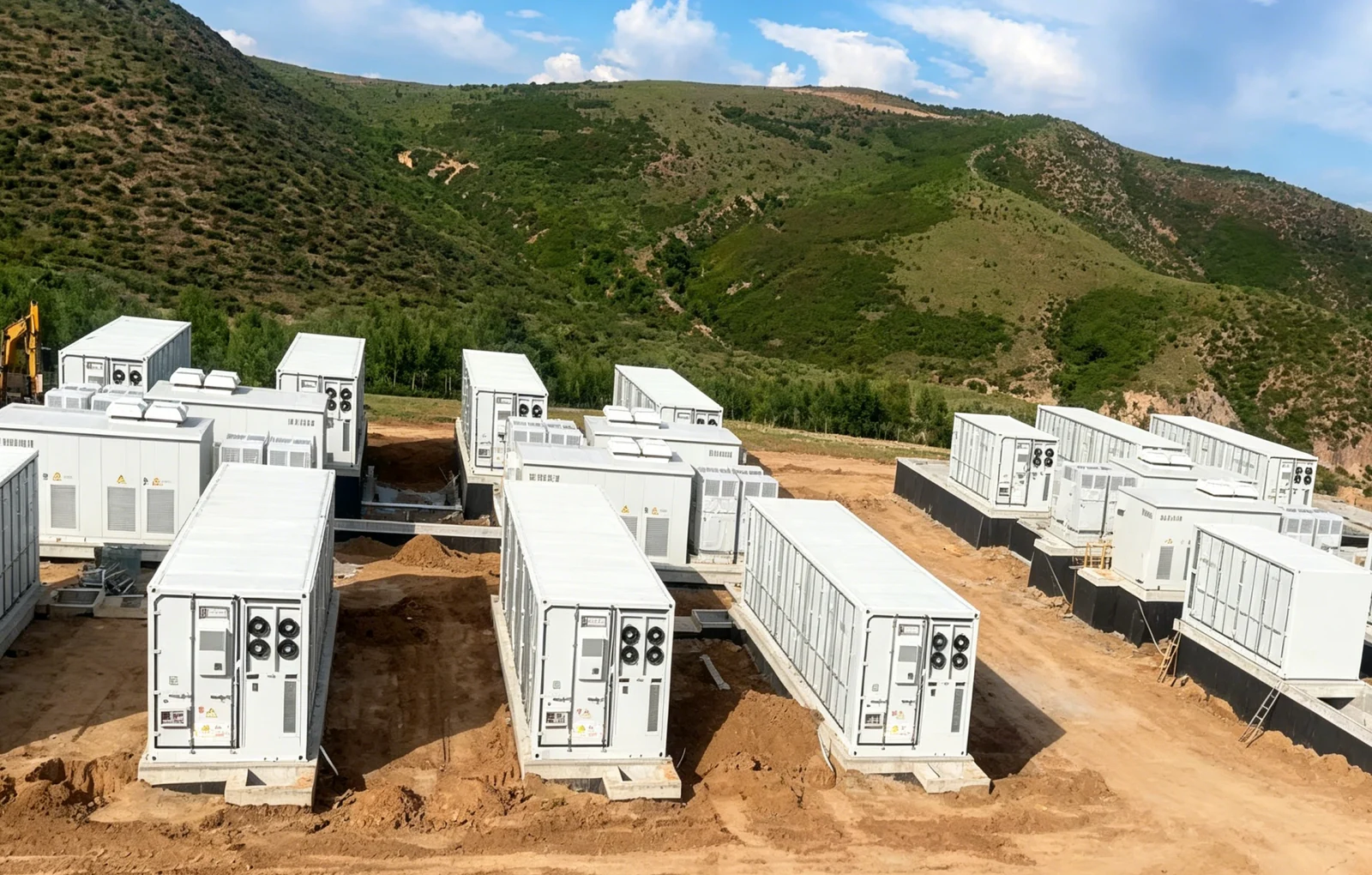
The short answer: judge a shortlisted C&I ESS supplier on four things you can verify without trusting a brochure — cell-lot to pack-serial traceability, in-house authorship of the BMS and EMS, a fire test report whose tested configuration matches your enclosure layout, and a warranty signed by an entity with enforceable assets. Twelve document requests test those four claims before money moves.
Below is the checklist we would run on 2–4 Chinese c&i ess suppliers at shortlist stage: what to demand, what the evasive reply sounds like, and which answer ends the conversation regardless of price. Four of the twelve checks break more shortlists than the other eight, so they get their own sections. None of them are industry-agnostic procurement boilerplate — a 10C supplier scorecard will not tell you that a UL 9540A result obtained on someone else's enclosure does not transfer to yours.
The 12-point C&I ESS supplier vetting checklist
Send this as one consolidated RFI with a deadline. Every row asks for an artefact, not an assurance. If a supplier answers a document request with an adjective, that is data.
| Check | Document to request | Common workaround you will be offered | Red flag |
|---|---|---|---|
| 1. Cell lot traceability | Cell lot numbers mapped to module and pack serials for your order window, plus written supply confirmation from the cell maker naming your integrator | "All our cells are grade-A, from CATL / EVE / [brand]"; a spec sheet with no lot mapping | Cannot produce a serial map for a shipment already built; brand named only in marketing copy |
| 2. BMS / EMS authorship | Firmware version history, the legal name of the code owner, and a screenshot of the development environment or repository ownership (redacted as needed) | "We use an industry-leading BMS platform" or a bought-in board with a private label | Refuses to name who owns the source; EMS is a third-party cloud the supplier cannot configure |
| 3. PCS–battery integration responsibility | Compatibility matrix, closed-loop protocol documents (CAN/Modbus register map), and a named party accepting integration warranty | "Fully compatible with all mainstream PCS"; verbal promise to "support you during commissioning" | No register map exists; integrator disclaims responsibility for third-party PCS faults in writing |
| 4. Enclosure structure and fire protection | Structural drawings, material certificates for the bess enclosure, suppression system datasheet and its listing, door/vent/cable-penetration details | Photos of a finished container; "IP54, fire suppression included" | Suppression agent quantity or detector placement not stated; drawings marked "for reference only" |
| 5. UL 9540A report scope | Full report with the tested-configuration page, plus the AHJ submission package used in a specific country | "UL 9540A tested" badge on a slide; certificate screenshot with no configuration page | Report issued for a different cell, module count, spacing or mounting than your design, with no gap analysis |
| 6. Third-party factory audit | An audit report from SGS, TÜV, Intertek or Bureau Veritas, dated, with scope and factory address matching the quoting entity | A self-issued ISO 9001 scan; an audit of a "partner factory" | Audit older than your contract negotiations with no follow-up; scope excludes the line that will build your units |
| 7. Warranty obligor | Warranty document naming one signing entity, with capacity-retention curve, cycle/throughput cap, and the freight and labour terms on replacement | Ten-year warranty described in a quotation line item, signed by an offshore trading company | No named obligor, no capacity curve, or the warranty is void without a service contract you have not seen |
| 8. Spares and service radius | Spare-parts list with lead times, plus the address and staffing of the nearest service point to your site | "24/7 global support"; a phone number and an email | Nearest technician is a distributor with no stocked modules; critical spares quoted on request only |
| 9. Verifiable references | Two grid-connected projects at comparable scale, with a contact you may call and permission to reference | A logo wall; "we have many projects in Europe" | Refuses a reference call, or every reference is an off-grid demo or a project still in commissioning |
| 10. Product liability insurance | Certificate of insurance showing coverage territory, limit and expiry, and confirming the insured legal name matches the contract counterparty | "Our products are insured" with no certificate; an unrelated group entity named as insured | Coverage expires inside your warranty period, or territory excludes your installation country |
| 11. BOM change notification | A PCN clause with defined notice period, a change freeze over your production window, and a re-test trigger for cell/module/suppression changes | "We always improve our products" — an implicit right to substitute | Refuses a change freeze, or excludes cell substitution from the notification list |
| 12. Payment and performance security | Draft contract with milestone-linked evidence, plus an advance-payment guarantee, performance bond or LC with document conditions you specify | "100% deposit for the best price"; a proforma invoice as the only paperwork | Any milestone released against a document the supplier produced about itself |
Break point 1: "UL 9540A tested" is not "approved for your site"
This is the most common shortlist error, and it is often innocent on the buyer's side. Three separate things get collapsed into one marketing phrase.
UL 9540A is a test method: it produces thermal runaway fire propagation data at cell, module, unit and (where applicable) installation level. UL 9540 is the system certification for energy storage systems and equipment. Neither one is an installation approval — that comes from the applicable installation code and the authority having jurisdiction (AHJ) in the country and municipality where you are building. A supplier marketing one link of that chain as the whole chain has either misunderstood its own file or is hoping you will.
The practical consequence is configuration dependence. A test result belongs to the arrangement that was tested — cell type, module count, unit spacing, mounting, suppression hardware, ventilation. Change the layout or the unit count and the earlier result does not travel with you automatically; you need a gap analysis from the supplier and, usually, a conversation with the AHJ. Ask for the report's configuration page and put it side by side with your single-line and site layout drawings.
Email wording that produces a usable answer or a usable refusal:
"Please send the UL 9540A report including the tested-configuration page, and the AHJ submission package you have used in [country]. If you have no submission package for that jurisdiction, please state that in writing."
The mirror problem applies to IEC 62619. It is the standard for safety of industrial lithium cells and batteries, and it is genuinely relevant — but citing it does not establish enclosure-level fire performance, and it does not satisfy a local code official who is asking a different question. Treat every cited standard as a lead to a document, never as a conclusion.
Break point 2: who actually signs the warranty
Three candidates will appear in a typical deal: the cell maker, the integrator, and an offshore sales entity. Only one of them should be your obligor, and it should be the one with assets in a jurisdiction where you can enforce a judgment. A ten-year warranty from a shell trading company is a ten-year option on the supplier's goodwill.
Read the warranty as a contract, not a duration. Four clauses decide whether it is worth anything:
- Capacity retention: a defined degradation curve, with the throughput or cycle cap and the temperature and C-rate assumptions under which the curve holds. A curve without stated test conditions is unenforceable in practice.
- Replacement economics: who pays freight, who pays labour, and whether a replacement resets or continues the original term.
- Survival: whether a parent company guarantee or insurance wraps the obligation, and what happens if the integrator is acquired or restructured.
- Conditions precedent: any clause that voids coverage if maintenance is not performed to a schedule — and whether you have actually been given that schedule's terms.
The trap worth naming explicitly: a long warranty that is functionally void because it depends on a maintenance regime whose scope, price and response times were never disclosed. Ask for the maintenance terms at the same time as the warranty, and price them into the comparison.
Break point 3: BOM drift between FAT and delivery
Configuration divergence between the witnessed factory acceptance test and the shipped units is not automatically bad faith — cell sourcing shifts, a sub-supplier discontinues a board, enclosure hardware is revised. It becomes a problem when nothing in the contract requires the supplier to tell you, and nothing in the shipment lets you prove what you received.
Two mechanisms close that gap. The first is a product change notification clause with a real notice period and a change freeze covering your production window, plus an explicit re-test obligation if the cell, module or suppression hardware changes. The second is the lot traceability from check 1: the serial map shipped with the units is the only artefact that lets you confirm at commissioning what was actually inside the bess enclosure.
Adopt one scoring rule and hold it: an unexplained post-FAT BOM change is a mandatory re-audit trigger, not a negotiation point. Discounts offered to accept a substitution are a signal about how the next substitution will be handled.
Break point 4: payment structure as a risk instrument
Payment terms are not a commercial courtesy; they are the mechanism that keeps leverage in your hands after the deposit leaves. Map money to evidence:
- Deposit against a signed contract and receipt of the agreed document pack — not against a proforma invoice alone.
- A tranche at a witnessed FAT, with your witness or a third-party inspector present at defined points.
- Balance against shipping documents that match the contracted configuration and serial list.
- Retention released at site acceptance testing, after commissioning data exists.
Instrument choice matters as much as timing. An LC at sight, an advance-payment guarantee and a performance bond each protect a different failure mode, and each must name the correct beneficiary entity — the same legal name that signs the warranty. An LC that pays against a supplier-issued certificate of quality protects you from almost nothing.
The governing rule: no milestone should be released by a document the supplier produced about itself. If you want a pre-shipment inspection, define its scope yourself rather than accepting the supplier's standard package.
Running the twelve checks in ten working days
- Days 1–2: send one consolidated RFI containing all twelve document requests with a hard deadline. Batched requests turn evasions into visible gaps instead of long conversations.
- Days 3–5: triage every document by issuer — third party, customer, or supplier self-declaration — and score each row green, amber or red.
- Days 6–8: reference and jurisdiction calls. One customer per supplier, with permission. One fire authority or local partner to test the AHJ acceptance story, because that is where a technically valid report can still fail commercially.
- Days 9–10: decision meeting with a rule stated in advance — for example, any red on checks 5, 7, 11 or 12 disqualifies regardless of price; any amber requires a written remediation plan before contract signature.
Be honest about what this produces. There is no public dataset that ranks Chinese c&i ess suppliers on delivery reliability, so the ranking has to come from your own document trail and reference calls. A trade-fair booth or a factory groundbreaking announcement starts a relationship; it is not evidence of capability for your order window. Our own public announcements — the battery factory groundbreaking and our Canton Fair participation — are exactly that kind of context, and we would expect you to apply the same scepticism to them as to any competitor's.
What this checklist does not tell you
It tests verifiability, not engineering quality or price competitiveness. A supplier can pass all twelve checks and still be the wrong commercial choice for your project, and a supplier can fail one check for a bureaucratic reason that a remediation plan fixes in a week.
This page also contains no verified factory capacity, shipment volume, customer list or project-count data, because none was available to us for publication. Every number-like claim you encounter during vetting — including any we might make — should be converted into a document you obtain and verify yourself. Certification and test claims are buyer-verified items by definition: a cited standard is not a certificate, and a certificate is not an approval for your site.
For the parallel decisions in this cluster, the commercial and technical groundwork sits elsewhere: what actually drives a C&I ESS quote, the site survey checklist, the EU compliance route, the scope of a UN38.3 report, and transformer upgrade versus storage for capacity expansion.
Frequently asked buyer questions
Can a factory self-inspection report replace a third-party pre-shipment inspection?
No. A self-inspection report is a supplier statement about its own output, so it cannot be the evidence that releases a payment milestone. If you want independent verification, commission it yourself or through SGS, TÜV, Intertek or Bureau Veritas, and write the inspection scope rather than accepting the supplier's standard checklist.
The supplier says the system is UL 9540A tested — is that enough for my fire marshal?
Usually not on its own. UL 9540A is a test method producing thermal runaway fire propagation data; UL 9540 is the system certification; acceptance is decided by the installation code and the AHJ. Ask for the tested-configuration page, compare it to your layout, and confirm the AHJ's expectations in writing before you order.
Should the warranty be issued by the cell manufacturer or by the integrator?
Whichever entity has assets you can reach and one name on the contract, the warranty and the insurance certificate. Cell-maker warranties often flow through the integrator, which means your practical counterparty is the integrator anyway. If the selling entity is an offshore trading company, request a parent guarantee or a warranty issued directly by the manufacturing entity.
Is a lower-tier cell acceptable if the BMS and EMS are genuinely in-house?
Those are separate questions and should be scored separately. In-house BMS and EMS ownership is a strong signal on support and configurability; cell provenance governs traceability, ageing behaviour and what your fire documentation can claim. Accepting an unknown cell source usually means accepting that no lot-level traceability exists for your shipment.
How many reference projects should I actually verify before releasing a deposit?
Two grid-connected projects at comparable scale, with a contact you can call, is a workable minimum — enough to test whether the commissioning story and the service story match the sales story. Fewer than that, or references that are all demos and off-grid installations, leaves the delivery risk unmeasured.
Next step
If you are holding 2–4 shortlisted c&i ess suppliers and a deposit decision this quarter, we will send the same twelve-row document request we use in our own project intake, adapted to your jurisdiction — plus a project-specific quotation that states which documents accompany each milestone. You can also review the published specifications we make available at model level, such as the SE 8KHB-D1-LV-ECO-II page, as a baseline for what a documented product page should look like before you ask for the twelve documents behind it.
Request the factory audit checklist and a project-specific quotation — tell us the site country, the target energy and power rating, and whether your scope includes a containerized BESS, a bess enclosure supply only, or a full EPC package, and we will return the checklist and quotation together.
Request a Quote
Your solar & storage system partner. From product selection to project support.