
C&I BESS Round-Trip Efficiency: Auxiliary Load Check
Most C&I BESS quotes hide HVAC, BMS and PCS standby loads outside the RTE figure. Use this 6-point checklist to make two quotes comparable before you sign.
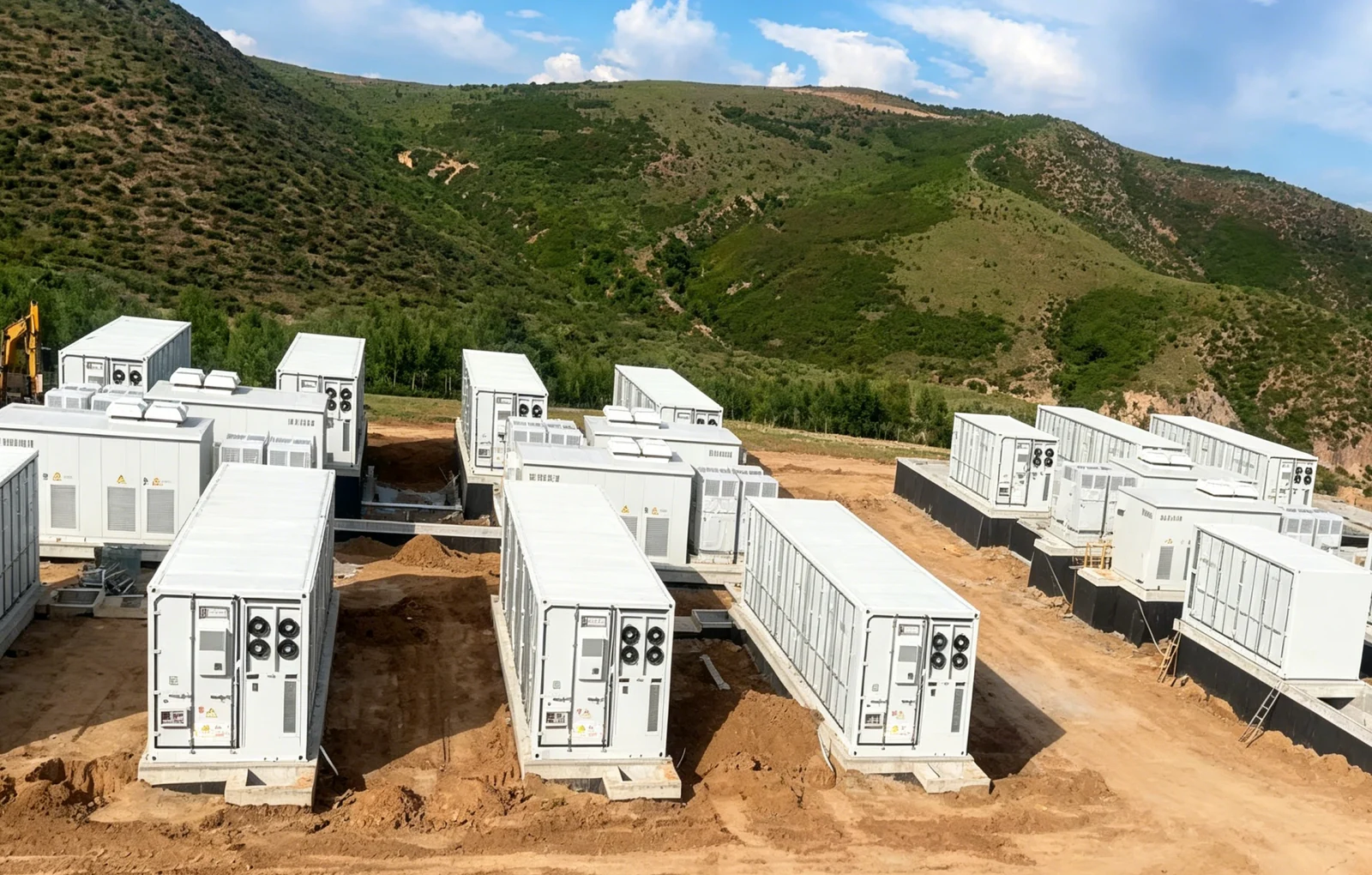
The short answer: two C&I BESS quotes that both read “RTE ≥ 90%” are not comparable until each states its measurement boundary, design ambient temperature, C-rate and SOC window — and says whether HVAC, BMS, PCS standby, fire suppression and station service sit inside or outside the number. Ask for those conditions plus an auxiliary load schedule in kW, in writing, before you sign.
Why your 90% RTE and a rival’s 90% RTE are not the same number
The contract-negotiation moment is almost always the same: a quote line reads “Round-trip efficiency ≥ 90%,” and nothing else. No ambient, no C-rate, no SOC window, no statement of what the boundary includes. Two such quotes can be presented on the same bid tab and differ in delivered AC energy by more than the price difference between them — because “90%” is being measured at two different places on the system.
Five variables move a C&I figure further than cell chemistry does:
- Boundary — DC-DC at the battery terminals, DC-AC at the PCS output, or AC-AC at the point of metering.
- Design ambient temperature — the dry-bulb the thermal-management load was calculated at.
- C-rate — charge and discharge power as a fraction of energy capacity.
- SOC window — the usable band, not the full pack.
- HVAC duty cycle — whether cooling energy is subtracted inside the figure or ignored outside it.
Published numbers already diverge, and the divergence is rarely explained. One vendor comparison table reports 84–88% round-trip solar efficiency for AC-coupled architecture against 90–94% for DC-coupled, with no test method reported in the table (setecpower.com, retrieved 2026-11-05). A second vendor table lists “system efficiency” of 96–97% air-cooled versus 98–99% liquid-cooled, again without a reported method (weltrus.com, publisher date 2026-05-13). These are publisher claims to interrogate, not benchmarks to design against.
The evidence gap, stated plainly: no independent, method-disclosed C&I round-trip efficiency dataset was available for this article. Published figures vary by boundary definition, so the checklist below is how you close the gap quote by quote — it is not a substitute benchmark, and you should not treat any single percentage as an industry norm.
The boundary table: put both vendors in the same row
| Boundary label | Typically included | Typically excluded | Who measures |
|---|---|---|---|
| DC-DC (battery terminals) | Cell and module losses, internal DC cabling, BMS consumption if the vendor says so | PCS conversion, transformer, all thermal management, station service | Cell/module supplier or system integrator bench test |
| DC-AC (PCS output) | DC-DC losses plus PCS conversion | Auxiliary transformer, HVAC, fire suppression, controls, station service | Integrator or PCS supplier |
| AC-AC (point of metering) | Everything between the meter and the meter, if the clause says so — including transformer and auxiliary loads | Only what the clause explicitly lists as excluded | Site power meter or witnessed test |
Copy both vendor sheets into this table before you discuss percentages. The highest number usually sits at the narrowest boundary.
Checklist 1 — Pin the efficiency to a boundary before you discuss the percentage
Demand the boundary in writing, and reject any quote that gives a percentage without a boundary label — an unlabelled RTE should not enter your financial model. Ask specifically whether an auxiliary or step-up transformer sits inside the measurement; on a medium-voltage interconnection that single component can move the answer materially, and it is commonly left out. Also confirm whether the figure describes a full round trip or a one-way conversion, because sizing and warranty clauses sometimes use the one-way delivery factor instead. Guidance on sizing explicitly separates the two: round-trip efficiency remains important for recharge energy and time-of-use savings, but it is not automatically the same as the one-way delivery factor used to convert required AC energy into installed battery capacity (pvb.com sizing guide).
Checklist 2 — Get auxiliary and parasitic load in kW, then convert it to annual kWh
Require a line-by-line auxiliary load schedule in kW: thermal management (compressors, pumps, fans), BMS and controls, PCS standby, fire detection and suppression, lighting, communications and any station-service load. For each line, ask for the duty cycle — continuous, thermostatically cycled, or event-only. Fire suppression is idle almost every hour of the year; cooling is the dominant annual consumer. A kW figure without a duty cycle cannot be annualised.
Then convert the schedule into annual kWh against your own load profile and subtract it from gross discharge energy before you compute savings. A nameplate ratio cannot perform that subtraction. Industry guidance points the same way: the gross price spread is not the net saving, and round-trip efficiency, auxiliary consumption, degradation and tariff rules all have to be deducted (gslenergybattery.com).
Checklist 3 — Stress thermal management at your site’s design ambient
Ask for the auxiliary kW figure at your design dry-bulb and at your peak sustained C-rate. A number quoted at 25 °C will not describe a 40 °C+ enclosure in summer. Ask directly whether the vendor’s published cooling comparison includes HVAC energy, and treat an unreported method as unverified until the test procedure is supplied. Require the thermal-management control strategy in writing: setpoints, the derating curve at high ambient, and whether the system derates power before it derates efficiency. Then cross-check the derating curve against your historic peak-load hour — if your peak coincides with the hottest hour, auxiliary load and derate hit simultaneously.
Checklist 4 — Interrogate the efficiency warranty: procedure, conditions, remedy
Ask which standard or internal procedure governs the test, who witnesses it, at what ambient, C-rate and SOC window, and whether auxiliary loads are energised during the measurement. Ask what the remedy is on shortfall — price adjustment, capacity augmentation at vendor cost, or nothing — and whether the guarantee attaches to RTE, to delivered AC energy, or to availability. Keep the efficiency warranty separate from the capacity and availability guarantee, because auxiliary consumption often sits inside the availability definition without ever being named in the efficiency clause.
Checklist 5 — Tie degradation and augmentation pricing to the auxiliary load
Ask how augmentation is triggered (capacity threshold, cycle count, calendar year) and whether auxiliary consumption during the augmented years appears in the modelled operating cost. Request delivered-energy figures for years 1, 5, 10 and end-of-warranty with auxiliary kWh as a visible line in each year, not folded into one blended ratio. Confirm whether the augmentation scope covers thermal-management upgrades if your site ambient proves higher than the design assumption, and what happens to the efficiency guarantee after augmentation — a re-tested boundary that shifts mid-contract is a cost you carry.
Checklist 6 — Rebuild the business case on delivered energy, then compare
Recompute arbitrage or demand-charge savings on delivered AC energy after auxiliary load. On a thin price spread, that difference is the whole margin. A worked example helps — but label it: assume a stated boundary, ambient, C-rate, SOC window and auxiliary kW, and show the arithmetic openly as a hypothetical, never as a measurement.
Then score vendors against the six items in one grid. A vendor that cannot answer items 2 and 4 in writing carries unquantified performance risk regardless of price. And when a vendor offers deployment scale as credibility — for example a 2.61 MWh BESS combined with 3.2 MW of existing and 2 MW of new solar in Sicily (JA Solar release via Yahoo Finance) — treat it as project context, not as evidence of auxiliary-inclusive round-trip efficiency.
What to put in the RFQ so the answers come back comparable
Add five mandatory quote-attachment lines and make them scored items in bid evaluation rather than post-award clarifications:
- Efficiency boundary definition (DC-DC, DC-AC or AC-AC), including transformer treatment.
- Auxiliary load schedule in kW, line by line, with duty cycle for each line.
- Test conditions: design ambient dry-bulb, C-rate and SOC window.
- Efficiency warranty test procedure, witness, and remedy on shortfall.
- End-of-warranty delivered-energy model with auxiliary kWh shown per year.
Set the rule that a quote missing any of the five lines is returned rather than interpreted. That single procurement rule will do more for your net savings than any additional percentage point.
FAQ
Does C&I BESS round-trip efficiency include HVAC and cooling load?
Usually not, unless the clause says so. Many published figures describe DC-DC or DC-AC conversion only, with cooling, BMS, standby and station service sitting outside the boundary. Because the boundary is rarely labelled, ask the vendor to state in writing whether thermal-management energy was energised and metered during the test.
What is a realistic round-trip efficiency for a commercial battery storage system?
No method-disclosed independent C&I dataset was available for this article, and published vendor numbers vary with boundary definition and test conditions. Rather than anchoring on a quoted figure, require the vendor to declare boundary, ambient, C-rate and SOC window, then compare quotes only after all four match.
Why do DC-coupled and AC-coupled systems show different round-trip efficiencies?
The conversion path differs. AC-coupled solar routes energy through multiple conversion stages before it reaches the battery; DC-coupled architectures reduce the number of stages. One vendor table reports 84–88% for AC-coupled against 90–94% for DC-coupled without a stated method, so treat the direction as plausible and the exact figures as unverified.
How is round-trip efficiency tested and warranted in a BESS contract?
Ask which procedure governs, who witnesses, at what ambient, C-rate and SOC window, and whether auxiliary loads are energised. Then ask the remedy on shortfall: price adjustment, vendor-funded augmentation, or nothing. A guarantee without a named procedure is a preference, not an obligation.
Does auxiliary load count against the availability guarantee?
Frequently yes, and silently. Auxiliary consumption often appears inside the availability definition while the efficiency clause omits it. Ask for both definitions side by side and confirm which one governs a shortfall, so you are not arguing about the same kWh under two different clauses.
Before you sign
Request a quote with a line-by-line auxiliary load and RTE breakdown — boundary conditions, design ambient temperature, C-rate and SOC window stated in writing before signing. Ask our team to attach that breakdown to the equipment quotation so the delivered-energy model you approve is the one the warranty measures.
Request a Quote
Your solar & storage system partner. From product selection to project support.