
Behind-the-Meter C&I ESS vs Transformer Upgrade
Can a behind-the-meter C&I ESS defer a 12–24 month transformer upgrade? Compare four options, size kW/kWh from a 15-minute load curve, and see export limits.
A behind-the-meter C&I battery storage system can defer a transformer upgrade only when four conditions hold: the missing power is a short-duration peak rather than daily energy, the required firm kW fits the cabinet's continuous rating, the local DNO has approved the import/export limit, and the site has footprint for fire setbacks. Where any one fails, storage buys time but does not remove the upgrade.
The four routes to more power at the same meter
The bottleneck most plants face is not "we need a battery" — it is "we need 150–400 kW more at the point of common coupling and the utility will not grant it this year." Four routes exist, and they fail in different ways. Comparing them on a single axis (capex) is what produces bad decisions.
| Route | Time to energise | Capex profile | Firm kW delivered | Duration | Permitting burden | Reversibility | Main failure mode |
|---|---|---|---|---|---|---|---|
| A — Wait for utility reinforcement | Outside your control | Zero | Full, permanent | Unlimited | None on your side | N/A | Production expansion slips; the utility's stated date is an estimate, not a commitment |
| B — Transformer / connection upgrade | Long; the 12–24 month figure in this comparison is your quoted case, not a general rule | High, with civil works and DNO charges | Full, permanent | Unlimited | Heavy: DNO application, protection study, civil permits | Low — sunk into the site | Lead time and cost overrun |
| C — Behind-the-meter BESS | Fastest, where footprint and the approval path are clear | Modular, per cabinet | Only up to the continuous rating, only for usable duration | Hours, not shifts | Moderate: interconnection approval, fire separation, export setting | High — relocatable, redeployable | Oversold as a capacity increase when it is a deferral tool |
| D — Diesel genset only | Short | Moderate to high, plus fuel logistics | Full for as long as fuel lasts | Long | Air, noise and fuel-storage permits; often blocked near residential receptors | Moderate | Run-hours limits, emissions rules, fuel supply and noise complaints |
The decision line is blunt: storage wins where the bottleneck is a demand peak; diesel wins where the bottleneck is energy over many hours; the upgrade wins where load growth is permanent and large. Most blocked-capacity sites are a mix of all three, which is why the load curve — not the brochure — decides.
Firm capacity versus energy shifting: how many kW-hours you actually own
Firm capacity means the continuous kW the cabinet can hold at the meter under your site's ambient temperature — not the inverter's surge rating and not the nameplate kVA. A 125 kW / 261 kWh cabinet nameplates at roughly 2.1 hours at full power, and the usable figure is lower once depth of discharge and end-of-life retention are applied. Ask the supplier for the usable-kWh figure and the derating curve at your design ambient temperature in writing; do not assume nameplate equals deliverable.
Two consequences follow, and they are where most business cases break:
- The transformer rating does not change. You are clamping the meter below a threshold, not adding capacity. If the load later exceeds the clamped threshold for longer than the battery's duration, the meter goes over and the demand charge lands anyway.
- A two-hour battery solves a 15-minute demand spike and solves nothing if the plant needs the extra kW across a 10-hour shift. The duration cliff is the single most common reason a storage project is approved internally and then disappoints.
Round-trip efficiency, cycle life and warranty terms should come from the supplier's own datasheet for the specific model you are buying. They are not interchangeable across vendors and should never be carried over from a competitor's brochure.
Sizing from a 15-minute load curve, not annual kWh
Annual consumption is the wrong input. Two plants with identical annual kWh can have completely different peak kW and peak duration, and only the interval curve exposes which one drives the demand charge. Ask your utility for 12 months of 15-minute interval data; where the utility supports it, a Green Button export gives you the same series in a standard format.
The method, step by step
- Find the kW. Rank the intervals by import kW and identify the top intervals that sit above your permitted capacity. The highest required firm kW equals the highest interval value you must clamp — that single interval sets the inverter rating.
- Find the kWh. Measure the width and frequency of those peak windows across the year. Energy above the limit = gap kW × window duration, summed across events inside the dispatch window you intend to cover. That window sets the battery energy.
- Map both onto the cabinet. Compare required firm kW to the continuous rating, and required energy to usable kWh after depth of discharge — not to nameplate.
- Add the growth step. Note the load you expect to add in 24 months and re-run steps 1–3 with it.
A labelled hypothetical — including where one cabinet fails
Assume a site with a 500 kW permitted capacity whose 15-minute curve peaks at 680 kW for 45 minutes, twice a day. The arithmetic:
- Gap = 680 − 500 = 180 kW.
- Energy above the limit per event = 180 kW × 0.75 h = 135 kWh; two events per day = 270 kWh.
- A single 125 kW / 261 kWh cabinet delivers 125 kW — 55 kW short of the 180 kW gap. One unit does not close it.
- Two cabinets give 250 kW of continuous rating, which covers 180 kW; the energy per event (135 kWh) fits well inside the combined nameplate, and the daily total (270 kWh) needs checking against usable energy and the recharge window between events.
Now widen the same gap to a four-hour shift: 180 kW × 4 h = 720 kWh above the limit, per day. Two cabinets cannot carry that, and the honest answer is either partial deferral (you still pay part of the excess) or a larger system — which is a different capital decision altogether.
Sizing from annual kWh instead produces both classic errors: an undersized kW string leaves the meter above the limit exactly when the demand charge lands, and an oversized kWh string raises capex for capability the curve never uses.
Export limitation, zero-export and the approval that actually decides feasibility
Feasibility is decided by the utility's interconnection approval, not by the battery datasheet. What matters at the point of common coupling is reverse power: whether the site may export, at what limit, and under which protection settings. Behind-the-meter systems with co-located PV are frequently approved on a zero-export or export-limited basis, with reverse-power protection configured and witnessed at commissioning.
Confirm all of the following in writing with your local DNO or utility before you release a purchase order — no primary tariff or grid-code text is asserted here, because the applicable rules are jurisdiction-specific:
- Permitted import and export at the PCC, and whether the existing connection agreement allows any export at all.
- Reverse-power protection settings and who witnesses the test.
- Anti-islanding requirement and the interconnection standard in force, including which edition applies.
- Whether the storage system is treated as generation for application purposes, and what that adds to the timeline.
The design standards that typically gate the equipment and siting package are UL 9540 (system listing), UL 9540A (thermal-runaway test data), NFPA 855 (installation) and IEEE 1547 (interconnection) — the set commonly cited in C&I storage guidance, for example by Weltrus in its 2026 C&I guide (published 13 May 2026). The edition adopted by your local authority governs, not the edition a vendor quotes. On European sites, the battery passport obligations under Regulation (EU) 2023/1542 add a documentation track that is separate from the safety listing; see our BESS passport checklist under EU Battery Regulation 2023/1542.
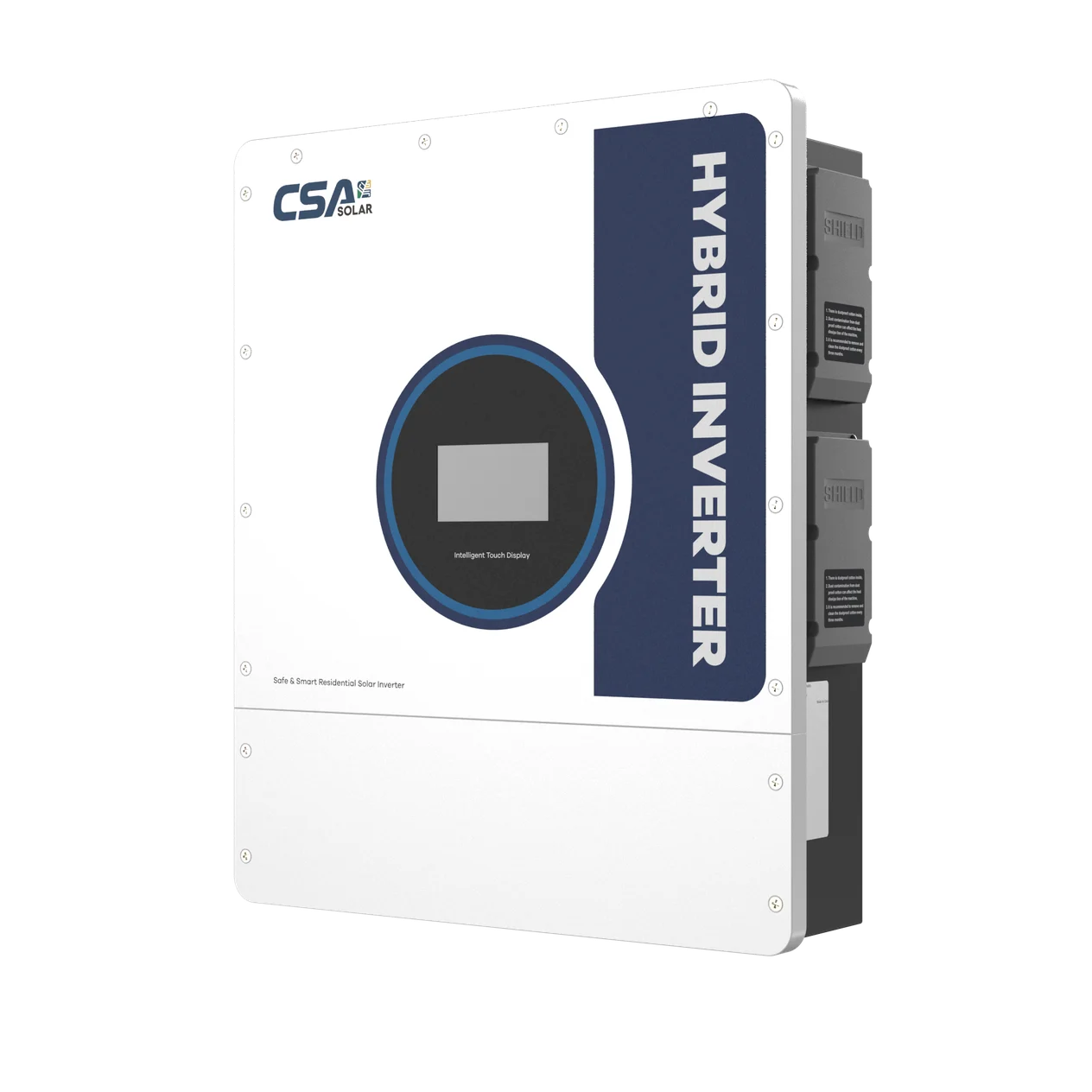
There is an operational cost to zero-export as well as a paperwork cost: a clamped export limit constrains how the battery and any co-located PV can be dispatched, which changes the business case, not just the application form. On sites adding a small rooftop array, a low-voltage hybrid inverter topology can be compared against AC-coupling to the C&I cabinet; above a modest PV array size, AC-coupling is usually the cleaner architecture to evaluate.
Approval sequence: load data → DNO pre-application → agreed export/import limit → protection settings → commissioning witness test. Skipping the pre-application is how projects lose three months after the equipment has shipped.
Where a battery genuinely cannot substitute — wait for the grid
Storage is a deferral tool, and it is the wrong tool under these conditions:
- The required firm kW exceeds the practical cabinet count on the available footprint — including fire separation and setback distances.
- The extra load runs longer than the usable duration every day — a shift-length gap is an energy problem, not a peak problem.
- Load growth is a permanent step change rather than a recurring peak.
- The site cannot meet fire separation and siting requirements for the cabinet, the enclosure or the access route.
- The DNO will not approve the import/export arrangement you need — this alone ends the option.
The physical constraint is real and often underestimated in dense sites: urban locations frequently lack the open space for containerised systems and require setback distances that exceed available footprint and building boundaries — the constraint that Blue Whale Energy and UNIGRID cited when announcing their Southeast Asia behind-the-meter C&I partnership (PR Newswire, 24 June 2025; a partnership statement, not an independent assessment). In those cases the cabinet, not the chemistry, becomes the blocker. A pre-quote site review is the cheapest way to find out; our 125kW/261kWh site survey checklist lists ten conditions to confirm first.
The cost of pretending is asymmetric: a system that covers only part of the peak still leaves you exposed to demand charges and still needs the upgrade later, so compare the routes over the deferral period with the residual gap priced in — not as a one-off capex line.
What to send us to get a capacity-substitution answer
Four artefacts are enough to produce a defensible sizing:
- 12 months of 15-minute interval data (utility portal export or Green Button file).
- The utility's capacity or connection quote, or the refusal letter — including any stated date.
- The site plan showing available footprint and setback distances to boundaries and occupied buildings.
- Your 24-month load-growth plan, in kW and operating hours.
What comes back is a 125 kW / 261 kWh cabinet capacity-substitution sizing showing firm kW delivered per month against your curve, the residual gap the grid must still cover, and the specific conditions under which the answer changes. That output is a sizing and feasibility opinion — it is not a substitute for the DNO's interconnection approval.
Evidence gaps to close before you sign anything
Two figures are worth contextualising, and both are publisher claims rather than established fact. Commercial battery storage additions are described as growing at double-digit compound rates through 2030, attributed to BloombergNEF market data as cited by Setec Power (article dated 22 October 2026, scope: global commercial segment) — treat it as an estimate about a market, not a forecast for your site. The same source reports demand surcharges representing 30–50% of a manufacturing facility's monthly utility invoice in North America and Europe; that is a published range, not a universal or EU-wide statistic, and it should be checked against your own bill structure.
No primary-source tariff, feed-in rule or grid-code text was retrieved for this comparison. Every country-specific figure — capacity charges, export rules, protection settings, permitted run-hours for diesel — must come from your local DNO, utility or regulator.
Next step: turn your load curve into a firm-kW number
Send your load curve and the utility's capacity quote; we return a 125kW/261kWh capacity-substitution sizing. Include the four artefacts above and the reply will show the arithmetic, not a headline number. If you are still at screening stage, start with the site survey checklist and then request the sizing.
Request a Quote
Your solar & storage system partner. From product selection to project support.