
Behind-the-Meter BESS for Data Center C&I: Build vs Wait
Compare behind-the-meter BESS for data center C&I with grid upgrades: lead times, N+1, NFPA 855 spacing and cost. Request the selection matrix.
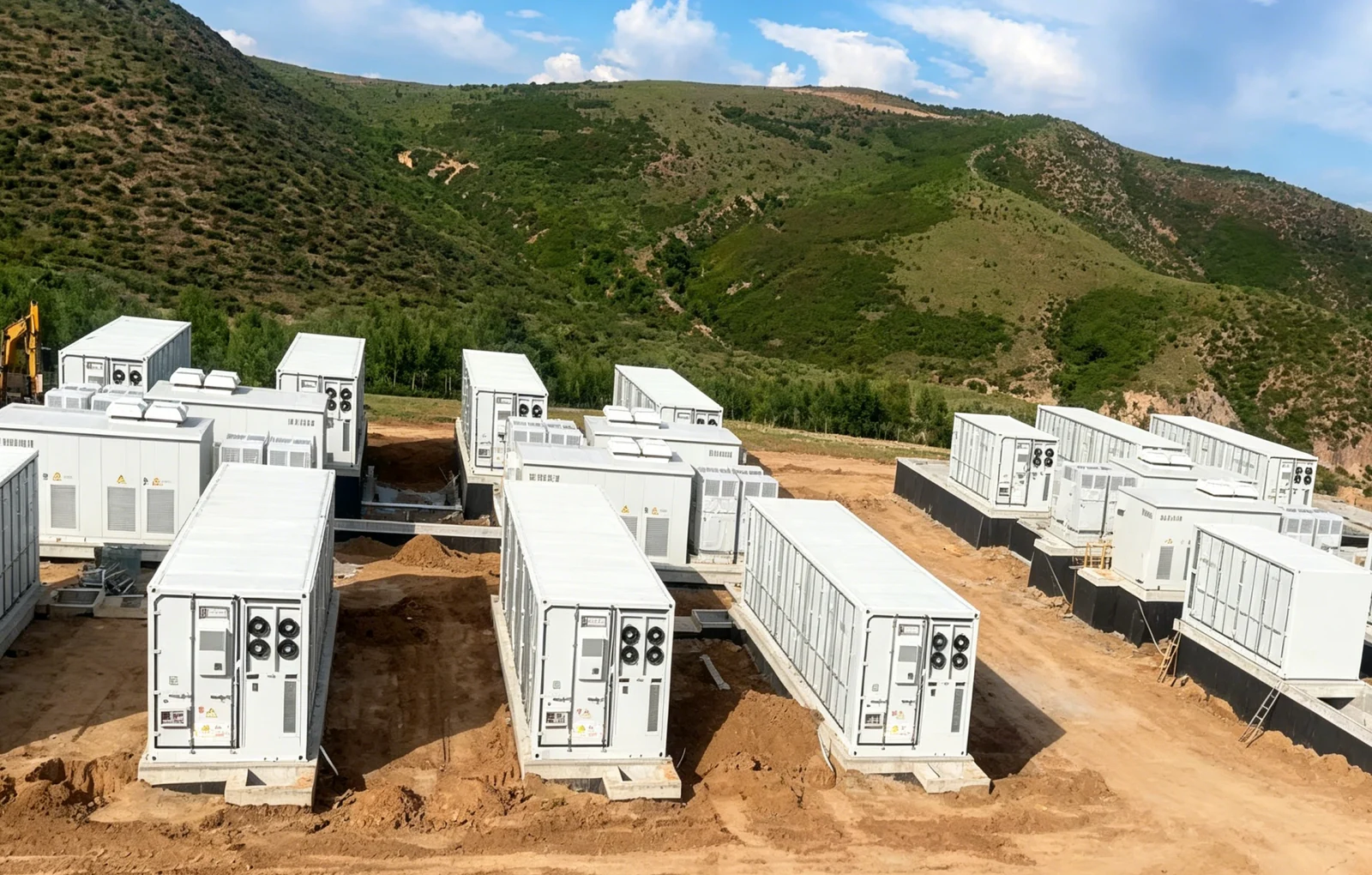
The short answer: build BTM BESS when the constraint is schedule and control, wait for the grid when the constraint is firm capacity
Shortlist behind-the-meter (BTM) BESS when three conditions hold at once: the campus load can be served within on-site or already-secured capacity plus the battery's approved operating envelope; the utility accepts the proposed import, export and dispatch behavior in writing; and the site can meet fire separation and AHJ requirements without consuming land you need for data halls or a transformer yard. Keep the utility/transformer upgrade as the base case when firm capacity is available on a schedule your shell and fit-out plan can absorb, or when the campus has no defensible answer yet to the fire-separation and land-use question.
That is the whole decision. Everything below exists to make it defensible in front of an investment committee — and to show where the shortlist logic breaks.
Most pages ranking for this comparison spend their first screen on what BTM storage is, then cite interconnection queue pressure and feature one vendor platform. That framing is not useful at shortlist stage, because it treats BTM BESS as a queue bypass and treats the grid path as "just a transformer." Neither holds. This comparison is built around five committee-visible variables — speed to energization, N+1 architecture, fire separation and site layout, demand-charge exposure, and exit risk — plus the conditions under which BTM BESS is the wrong buy.
The deliverable you actually need
Ask for a two-column investment-committee memo, not a vendor proposal. Column A: energization date, capex structure, N+1 role, site and fire risk, residual value under the BTM path. Column B: the same fields under the grid upgrade path. If a supplier or utility cannot populate a field, that gap is the finding — record it as an open item with an owner and a date rather than filling it with an assumption.
Why an AI data center is not a factory BTM project
A general industrial BESS business case is usually built on a demand-charge bill with a predictable load shape. A data center campus is a different electrical animal: high load density per acre, large block step-loads when training clusters ramp, tight ramp-rate expectations from the utility, 24/7 operation with almost no natural load valley, and a redundancy obligation that runs through the whole plant. Sizing that ignores the UPS and genset topology, step-load behavior, single-line diagram and protection coordination will produce a battery that looks correctly sized on an energy basis and fails on a dynamics basis.
This is also where the general industrial comparison stops helping. The factory-focused economics of a BTM system — peak shaving against a demand ratchet — are a secondary consideration here. On a data center site, the BESS value case is primarily about load shaping under utility-agreed operating modes, possible utility interaction, and whether the battery can serve a defined role in the resilience architecture. Every one of those is permissioned, not purchased: the utility and AHJ decide which modes exist.
Comparison table: BTM BESS vs utility/transformer upgrade for a data center campus
| Decision dimension | BTM BESS path | Grid / transformer upgrade path | Choose BTM if… | Choose grid if… |
|---|---|---|---|---|
| Time to energization | Battery can be procured and built behind the meter, but energization still depends on utility review of the interconnection and operating profile, plus AHJ permit issuance | Dependent on queue position, study scope, substation/feeder work and long-lead transformer and switchgear supply | A written utility response confirms the proposed operating modes, and the campus can energize on existing or interim capacity | The utility confirms firm capacity inside your fit-out window, with a schedule you can hold the contractor to |
| Capex and commercial structure | Customer-owned or third-party financed; cost sits with the campus owner or a storage provider under a services agreement | Utility-funded network upgrade recovered through tariffs, or customer-funded construction contribution | You can underwrite 10–15 year total cost including augmentation, O&M and replacement — not first cost | The network charge is transparent, capped and lower than the all-in BTM cost of service over the same horizon |
| Scalability and augmentation | Modular blocks; capacity added in increments, subject to land, thermal and fire separation limits | Step-function capacity; the next increment may require a new study cycle | Load growth is uncertain in timing and can be met in blocks | Load growth is well forecast and one upgrade covers the horizon |
| Reliability and N+1 | Supports defined operating modes; does not automatically replace UPS or diesel generators | Improves supply availability but does not by itself satisfy data hall N+1 | A failure-mode analysis shows the BESS block architecture meets a stated role without eroding the existing N+1 | Your N+1 case is already satisfied and the upgrade is purely a capacity question |
| Fire separation, footprint and permitting | Site-specific: driven by unit listing, test evidence, chemistry, installation method and AHJ interpretation; consumes land | Substation and switchyard footprint, plus environmental and local permitting | Layout drawings show separation and fire access achievable without losing data hall or transformer yard land | The BESS footprint would displace revenue-generating white space or fail separation on the available parcel |
| Demand charges and energy cost exposure | Depends entirely on the tariff and the approved dispatch mode; benefits must be modelled, not assumed | Exposure shifts to network charges and tariff structure | An 8760 dispatch model on your actual tariff shows value under conservative sensitivity cases | Modelled BTM value does not survive conservative tariff and cycling assumptions |
| Decommissioning and residual value | Owner or financier carries replacement, recycling and end-of-term obligations | Asset remains with the utility; no residual obligation to the campus | A written end-of-term plan exists for augmentation, recycling and residual value | You want no balance-sheet exposure to a degrading asset |
Two rows in that table are routinely filled with invented numbers. Do not accept them. There is no defensible generic BTM deployment timeline, no universal transformer lead time, and no standard NFPA 855 separation distance that can be quoted without the listed unit, the test data, the installation method and the AHJ's interpretation. Require written utility schedules and written EPC long-lead confirmations, dated and named.
Timeline and interconnection: what BTM can and cannot accelerate
Queue pressure in US data center markets is real and documented. As reported by Verse on 15 July 2026, data centers accounted for nearly 5,100 MW of the peak load forecast increase in PJM for the 2027/28 delivery year, and PJM projects data centers will drive 94% of its 32 GW of peak load growth through 2030 (verse.inc). Those are PJM forecast figures as reported by a third party — context for why the question is being asked, not evidence that a battery shortens any individual project's schedule.
What BTM storage can plausibly do is change the conversation with the utility: a battery dispatched under an agreed control scheme can present controlled, predictable load behavior at the point of interconnection, which is the kind of behavior a utility can study. Whether that translates into an earlier energization date is a utility decision, made after studies, and it should never be presented to a committee as a guaranteed outcome. BTM BESS does not guarantee faster interconnection.
For a concrete but deliberately non-generalizable reference point: the 300-MWh Plato South BESS, built as part of a dedicated behind-the-meter generation facility for a data center campus, reached mechanical completion 10 months after the limited notice to proceed, with design and early procurement starting under that LNTP (Burns & McDonnell project page). That is one project, under one contract structure, in one jurisdiction. It is not a benchmark, not a CSA Solar result, and not transferable to your site without your own utility and AHJ inputs.
Verification steps to run before any schedule commitment
- Utility pre-application meeting with the proposed operating modes tabled in writing — charge, discharge, export, ramp limits, ride-through.
- A defined interconnection study scope, with the study agreement and queue position documented.
- Written transformer and switchgear lead-time confirmation from the actual supplier, not a distributor estimate.
- AHJ pre-submittal meeting, with minutes recording the separation-distance basis and the fire access expectation.
Reliability and N+1: where BESS fits around UPS and generators
Define the BESS role before comparing vendors, because "N+1 BESS" is a meaningless phrase without a defined block architecture, a defined failure mode, and a defined transition sequence. The realistic roles are separable and should be priced separately:
- Grid-parallel load shaping — battery absorbs or shaves load within an approved envelope.
- Demand response / utility interaction — only where the program and the interconnect agreement allow it.
- Backup transition support — bridging a transfer, only if protection coordination and the transfer sequence support it.
- Islanding — rarely approved, and a completely different engineering and permitting scope.
Do not accept the claim that a BESS replaces diesel generators. It can only do so if the design, the approved operating modes, the failure-mode analysis and the AHJ all explicitly support that function — and on most US campuses the genset fleet is retained regardless. Before any vendor comparison, require the single-line diagram, the protection coordination study, a controls and operating-mode narrative, and the cyber/communications scope. Compare each BESS block architecture against the data hall's actual N+1 requirement, not against a marketing redundancy claim.
Fire separation and site selection: the constraint that can void the business case
NFPA 855 and UL 9540/9540A belong in the diligence file as verification items, not in the sales deck as assurances. The framework sets requirements; the product-level answer depends on the specific listed unit, the configuration tested, the installation method and how the authority having jurisdiction reads all three. No universal separation distance can be quoted without that review.
Treat this as a land problem early, because it is. Separation distances, fire access lanes, and the exclusion of occupied buildings can consume acreage that competes directly with data halls and the transformer yard — on a dense AI campus, that trade is often the deciding one. Require layout drawings with separation distances dimensioned, a fire access plan, and an emergency response plan tied to the chosen chemistry and unit listing.
Investment-committee math: capex, demand charges and exit risk
Put owned and third-party-financed BESS structures, the utility upgrade cost, ongoing network charges, demand-charge exposure and O&M obligations into a single model with a 10–15 year view. Underwrite with a site-specific 8760 dispatch model and explicit sensitivity cases on tariff structure, cycling, augmentation and availability. Vendor payback claims are not underwriting inputs.
Add the exit analysis the grid path does not require: augmentation schedule and cost, warranty limits and throughput caps, spare-parts strategy, decommissioning and recycling obligations, and residual value at end of term. Incentives and tax treatment belong with the buyer's tax counsel — they should not appear as assumed project economics in the committee memo, and no market-report payback or demand-charge-reduction figure should be carried into the model without your own tariff data behind it.
Procurement checklist: documents to request before shortlisting
- Single-line diagram, protection coordination study, and controls / operating-mode narrative.
- UL 9540 listing and UL 9540A test reports for the proposed unit and configuration, with the scope of the test clearly stated.
- NFPA 855 compliance matrix, AHJ pre-submittal minutes, dimensioned layout drawing, and fire access plan.
- Utility interconnection application or pre-application record and the study scope.
- Written transformer and switchgear lead-time confirmation.
- Defined N+1 architecture and failure-mode analysis.
- Performance guarantee, augmentation terms, warranty, O&M scope and spare-parts plan.
- EPC schedule with long-lead items flagged, plus a decommissioning, recycling and residual-value plan.
Common misjudgments that derail a data center BTM decision
- "BTM BESS skips the interconnection queue." Utility studies and approvals still apply; the battery changes what you can offer the utility, not whether the utility decides.
- "A grid upgrade is just a transformer." Feeders, substation work, network upgrades and tariff design can move both cost and schedule.
- "BESS replaces diesel generators." Only if design, approved modes and AHJ approval say so.
- "Lowest $/kWh wins." Footprint, separation, augmentation and warranty terms routinely dominate lifecycle cost on a data center site.
- "One separation distance fits all sites." Chemistry, listing, test data, layout and AHJ interpretation drive the answer.
Next step: turn the comparison into a site-specific shortlist
If the table above leaves you with a shortlist rather than a decision, that is the correct outcome — the remaining variables are site-specific. Request the data center BTM BESS vs grid upgrade selection matrix and site assessment quote, and we will return the document checklist, the layout and separation constraints for your parcel, and a scoped assessment of which path your committee can defend.
Questions buyers ask at shortlist stage
Does behind-the-meter BESS speed up data center interconnection?
Not automatically. A battery dispatched under a utility-agreed control scheme can present more predictable load behavior, which may help the utility study the request. The energization date is still set by utility studies, the interconnect agreement and AHJ permits. Ask for written confirmation of the operating modes before any schedule benefit is assumed.
How does NFPA 855 separation distance affect data center BESS siting?
It can determine whether the project fits on the parcel at all. Separation requirements depend on the specific listed unit, the UL 9540A test evidence, the installation method and the AHJ's interpretation, so the number must come from an AHJ pre-submittal review of your layout — not from a datasheet or a comparable project. On dense campuses, the land consumed by separation and fire access often competes directly with data hall or transformer yard acreage.
Can a BESS replace diesel generators for N+1 backup in a data center?
Only where the design, the approved operating modes, the failure-mode analysis and the AHJ explicitly support that function. In most US deployments the genset fleet is retained, and the BESS is credited for a narrower role. Any proposal that removes generator capacity should be treated as a design change requiring its own review, not as a BESS feature.
What documents should a data center buyer request from a BTM BESS supplier?
Single-line diagram and protection coordination, UL 9540 listing and UL 9540A reports with stated scope, an NFPA 855 compliance matrix with AHJ minutes, dimensioned layout and fire access drawings, utility application and study scope, written long-lead equipment confirmations, a defined N+1 architecture and failure-mode analysis, and the commercial terms covering performance guarantee, augmentation, warranty, O&M and end-of-term recycling.
Request a Quote
Your solar & storage system partner. From product selection to project support.