
All-in-One vs Split C&I ESS: Freight, Cert & Site Cost
All-in-one vs split C&I ESS: see how shipping volume, certification scope and site works change landed cost — plus 5 questions to ask before you shortlist.
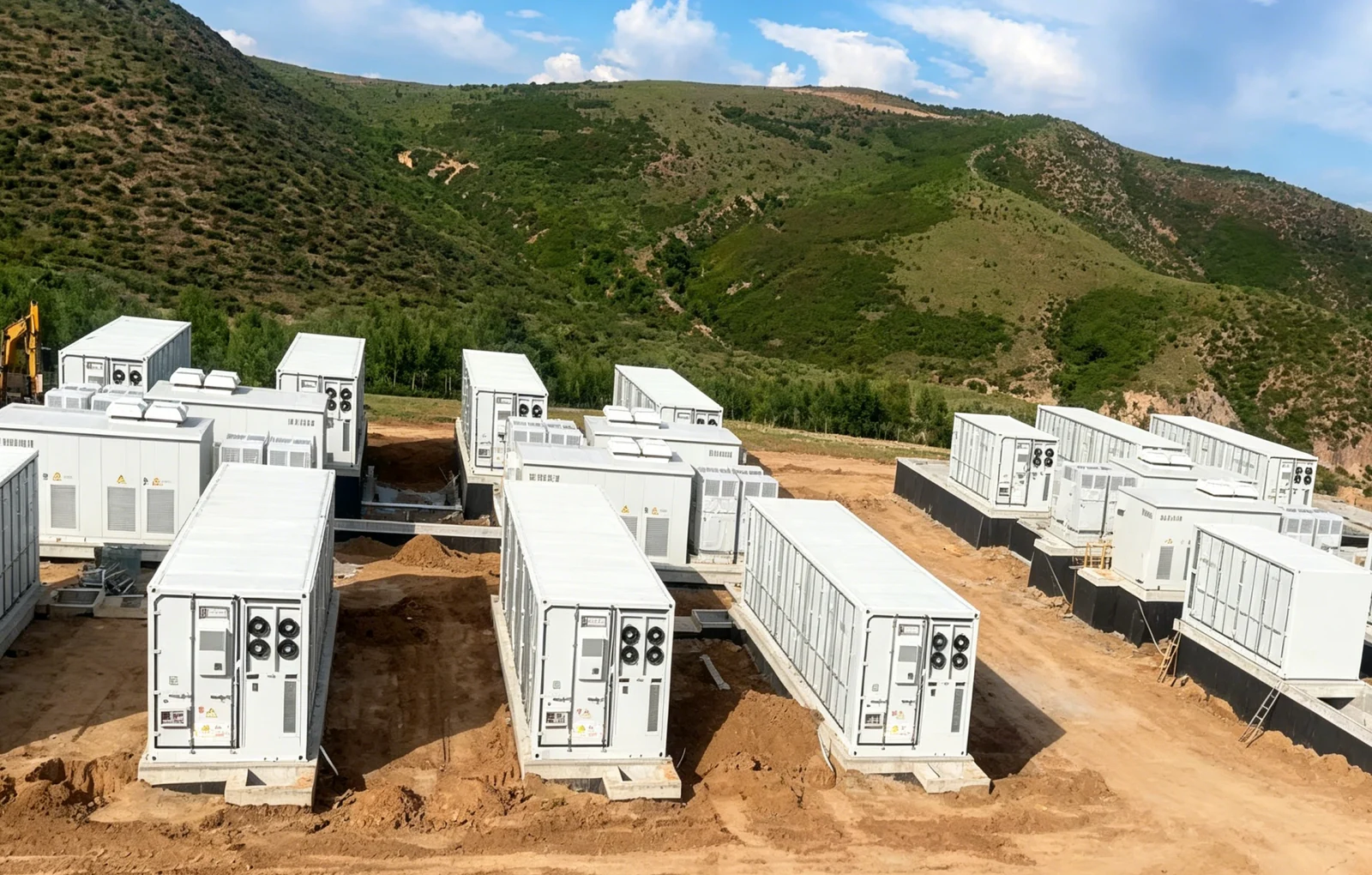
The short answer: the cheaper architecture is decided on four cost lines, not the sticker price
For a standardised cabinet configuration up to roughly 2 MWh, an all-in-one C&I ESS usually lands cheaper once you count shipping units, certificate ownership and site labour. Above that — or where capacity is phased, an existing transformer is reused, or your own electrical team is strong — a split system can win. But only after you have priced your freight lane, the certificate scope and the electrical work you absorb.
That verdict is a starting hypothesis, not a rule. There is no reliable universal price per kWh for a complete C&I BESS: total cost moves with PCS rating, duration, cooling architecture, transformer and switchgear requirements, fire protection, EMS functions, civil works, grid connection, commissioning, freight, certification and local labour. Two systems with the same battery capacity can have very different installed costs once those lines are priced. What follows is a way to price them before you issue the RFQ — not a specification sheet.
The four lines that actually differ
- Shipping units and lifting. How many consignments, how heavy each one is, and what equipment your receiving site needs.
- Certification scope and owner. Who legally holds the system-level listing, and what evidence exists per market.
- On-site civil and electrical scope. How much cabling, protection, transformer work and termination lands on your own team.
- Commissioning and warranty interfaces. How many parties must agree before energisation, and who you call when something fails.
Every ranking page compares batteries, PCS, EMS and thermal management as components. That walkthrough does not help at shortlist stage. What helps is knowing which cells of your comparison you can answer from documents and which must become questions to the supplier — that is the structure used below, and it is where a quote usually stops being comparable.
Freight: what you actually pay to move an all-in-one cabinet versus a split system
An integrated unit turns the whole system into one shipping unit (or a small, repeatable set of them). A split system turns it into a consignment plan: battery racks, PCS skids, transformer, switchgear, cable kits, sometimes from different suppliers on different schedules. The freight difference is rarely the ocean rate — it is the number of handlings, the lifting class at destination and the second wave of shipments nobody quoted.
Run the check in this order. First, take the unit's dimensions, gross weight and centre of gravity and test them against the internal envelope of a 40 ft high-cube container — including whether the unit is loaded through the doors or on a flat rack, and whether the height clears the door aperture. Second, ask whether the load is volume-limited or weight-limited; on dense battery cabinets the container cubes out before it weighs out, and on split systems the opposite often happens across mixed consignments. Third, confirm crane class and hardstand at your receiving site against the heaviest single lift, not the average.
Documents to request, not assume
- A loading plan annotated with unit dimensions, gross weight, centre of gravity and lifting points for your MWh/MW configuration.
- UN38.3 test summary matching the shipping configuration, plus state-of-charge limits applied at dispatch.
- Correct HS classification and any carrier or port restrictions that apply to your lane and destination.
- The transport and offloading scope boundaries: who is responsible from quay to hardstand, and where the crane is excluded.
Then price the second wave that quotes routinely omit: spare modules, replacement PCS parts and any component shipped later on a separate schedule. On a split architecture, a single late component can hold energisation even when 90% of the consignment has arrived.
Certification: one system certificate or a stack you have to assemble
This is the line most likely to decide the architecture, and the one most often reduced to a sentence. An integrated unit is tested and listed as one product: the supplier owns the system-level listing, and you receive a certificate covering the assembly as shipped. A split system means someone must prove the combination — including protocol compatibility between a separately sourced PCS and BMS, protection coordination, and the fire-safety case for the assembly as installed. If that someone is you, the second certification round is your cost and your schedule risk.
Keep the scopes distinct
- UL9540 — the system-level listing for the complete energy storage system.
- UL9540A — thermal runaway fire testing, reported at cell, module and unit level; the level of test matters when the installation is assessed.
- UL1973 — the battery (energy storage) standard. A listed battery module is not a listed system.
- CE marking with IEC 62619 for the cells/battery on EU placements — a product-safety framework, not a grid-code approval.
- Grid-code compliance for grid-tied operation — a separate evaluation from product safety.
On the EU side, a vendor news page reports that the European Commission notified on 28 April 2026 a mandatory transition to IEC 62933-5-2:2026 for C&I ESS placed on the EU market from 1 June 2026, requiring tested dynamic reactive power response (Q(U) curve behaviour and Q(t) transient response) under actual grid disturbance scenarios, with no grandfathering indicated in that notification (source). Treat that as a lead to verify, not a settled fact: the publisher is a vendor news page, not the Commission, and the exact scope, transition terms and national implementation should be confirmed against the Commission's own publication and your TSO's guidance before you write it into a contract. The same page notes that accredited laboratories capable of replicating grid disturbance profiles may be scarce — which is a schedule constraint worth testing early, whichever architecture you choose.
For either architecture, ask which laboratory, which report number and which standard revision back each claim, and whether the certificate covers the exact model and configuration you are buying. Factory certification of a product family is not model-level compliance.
Site works and labour: where a split system quietly adds cost
An integrated unit moves work into the factory: inter-cabinet cabling, PCS-to-battery wiring, closed-loop controls, thermal management integration and factory acceptance testing. A split system puts that scope back on your site — transformer and switchgear installation, DC and AC cabling and terminations, protection coordination, EMS integration and point-to-point commissioning.
That shift is not automatically bad. If you already own the transformer and switchgear, or your team installs this equipment routinely, the split route lets you reuse assets and labour you are paying for anyway. The failure mode is assuming that scope is free because it is "just installation". Ask each supplier for a commissioning hour estimate per architecture, and ask which interfaces they own versus which sit with you.
Two constraints buyers underestimate
Footprint and fire review. Where site area is the binding constraint, an integrated cabinet's smaller footprint and single fire-assessment boundary can be decisive; a split layout needs plant-room or yard allocation for separate equipment, and the fire review follows the layout.
Relocation. The hardware can often be moved to another site, but civil work, electrical interconnection, fire review, controls integration and commissioning may need to be repeated at the new location. If the facility lease is short or the load is temporary, price that repeat cycle into the business case rather than discovering it at decommissioning.
Side-by-side comparison: the landed-cost drivers that actually differ
Use this table as a worksheet. Cells marked site-specific cannot be answered generically — fill them with your own MWh, MW, duration, port and site constraints before you compare.
| Cost driver | All-in-one | Split system | What to ask the supplier |
|---|---|---|---|
| Shipping units per project | One product line, repeatable units | Multiple consignments across suppliers | Send a loading plan for my exact configuration (site-specific) |
| Gross weight and centre of gravity per unit | Fixed per model | Varies by component | Give gross weight, CoG and lifting points per unit |
| Lifting equipment at destination | One crane class for one lift | Multiple lifts, several classes | Who supplies the crane, and what is excluded? |
| Certificate holder | Supplier holds system-level listing | Buyer or integrator assembles the case | Who is the legal holder of the system listing? |
| Certificate scope and revision | System-level plus module-level | Module-level only until combined | Exact standard revision, report number, laboratory |
| Grid-code evidence | Tested as a unit | Depends on PCS and combination | What evidence do you hold for my market, and how is it maintained? |
| Civil and electrical scope on site | Reduced: pads, interconnection | Wider: transformer, switchgear, cabling, protection | Provide a written scope split with exclusions |
| Commissioning interfaces | Single interface, factory-tested | Multiple parties, point-to-point checks | Commissioning hours estimate and who signs off |
| Expansion path | Add matched units | Add capacity to existing plant | How does the certificate and controls scope change with expansion? |
| Spares logistics | Module-level spares, single lead time | Spares per component and supplier | Spare parts list, lead times, second-wave freight cost |
| Single point of accountability | One contract, one warranty | Split warranty across vendors | Who is my contact when the system trips? (site-specific) |
| Schedule to energisation | Shorter interface chain | Longer, more rework triggers | Indicative delivery-to-energisation sequence |
Where each architecture bites: the site conditions that flip the answer
The shorthand that all-in-one is cheaper below roughly 2 MWh circulates widely, including among vendors selling integrated systems. Treat it as an untested industry rule of thumb. It is not a boundary derived from your freight lane, your certification position or your labour rates, and it should be re-run against those three inputs every time.
Test all-in-one first if site area is tight, the delivery window is short, no one on your side wants to own the system-level listing, or you need one accountable party for warranty. Test split first if capacity is phased over several budget cycles, you already own transformer and switchgear you can reuse, your in-house electrical team is genuinely capable of the interconnection scope, or the system may be relocated.
Five questions to ask every supplier before you shortlist
- Can you send a container loading plan with dimensions, gross weight, centre of gravity and lifting points for my MWh/MW configuration?
- Who holds the system-level certificate, what is its exact scope and standard revision, and which laboratory and report number back it?
- What grid-code evidence do you hold for my market, and how will it be updated for the EU requirements reported for 2026 placements?
- What is excluded from your supply — civil works, transformer, switchgear, cabling, commissioning, fire review, permits?
- What does warranty cover across the whole system, who is the single point of contact, and how are spares shipped and lead-timed?
A supplier who answers all five in writing, with documents attached, has given you something comparable. A supplier who answers three and defers two has told you where your risk sits.
Common questions on architecture, freight and certification
Is an all-in-one C&I ESS always cheaper than a split system?
No. It is frequently cheaper on freight units, certificate ownership and site labour for standardised configurations, but the advantage can reverse at multi-MWh scale, in phased builds, or where you can reuse existing transformer and switchgear. The comparison must be run on your own site and lane.
Does an all-in-one BESS need UL9540 as a system, or is UL1973 per module enough?
They answer different questions. UL1973 covers the battery; UL9540 is the system-level listing. If the installation is assessed at system level, module-level listing alone does not close that gap — confirm what the authority having jurisdiction requires and what your supplier's certificate actually covers.
How is a commercial battery storage system shipped — container, cabinet or both?
Both are common. Integrated units ship as cabinets or containerised assemblies; split systems ship racks, PCS skids and transformers as separate consignments. What matters commercially is the number of units, the heaviest lift, and whether the documentation set (loading plan, UN38.3 summary, state-of-charge limits, HS classification) matches the configuration actually dispatched.
What changes for C&I ESS entering the EU market from June 2026 under IEC 62933-5-2:2026?
A vendor report states that systems placed on the EU market from 1 June 2026 must demonstrate dynamic reactive power response under grid disturbance conditions, with no grandfathering indicated. That report is not the regulator's own text. Verify the current requirement directly with the European Commission's publication and your national TSO before relying on it in a specification or contract.
Turn this comparison into a quotable landed cost
Bring four things to the quote request: your MWh and MW with duration, your site constraints (available area, hardstand, crane access, existing transformer and switchgear), your destination port, and the certification evidence your authority or offtaker will demand. With those, the four cost lines — shipping units and lifting, certificate scope and owner, on-site scope, and commissioning interfaces — can be priced against each other rather than argued about.
What we will not give you is a headline $/kWh, a container count without your MWh/MW and duration, or a certificate claim without the report behind it. Freight, certification and site labour are quoted per project because they are properties of your site and your lane, not of a product family.
Request a quote with datasheet and container loading plan for your site size — include the site constraints above and we will return the datasheet, the loading plan for your configuration, and the certification file pack with scope, standard revision and report references so you can compare it line by line against the alternative on your shortlist.
Request a Quote
Your solar & storage system partner. From product selection to project support.